Frida Kahlo at the Tate
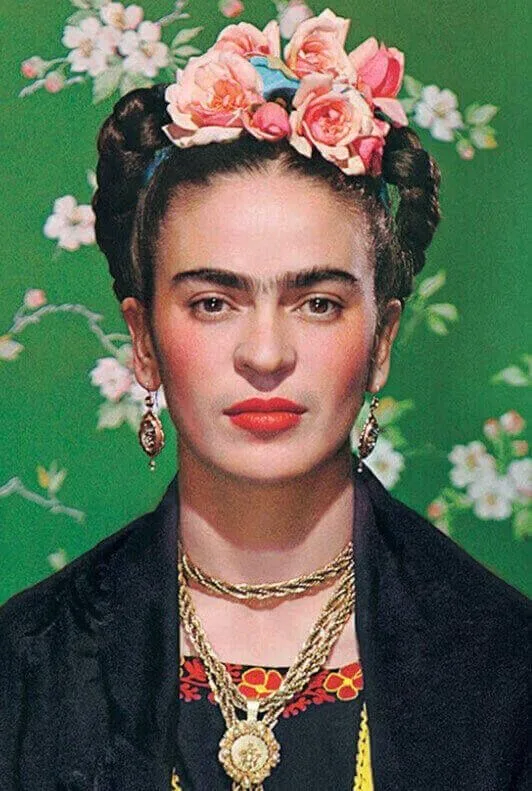
Tate Modern’s exhibition, Frida: The Making of an Icon, has broken the gallery’s ticket records, and it ends in a room of ‘Frida’ merch, all sponsored by Bank of America. There is certainly some irony in selling a communist’s legacy to the public along with an option for a £64 dinner package. This piece will explore how Frida Kahlo became a brand, question it, but will ultimately argue that the Tate should not be bashed for its Frida exhibition.
Frida as the Product
Something perhaps unexpected about the last room of the Tate Modern’s new Frida Kahlo exhibition is that it doesn’t hold a single painting of hers. It does, however, hold over 200 commercial objects bearing her face, flowers, and eyebrows, of course, ranging from keychains to tequila bottles. This room was named ‘Fridamania’, and it serves as the finale of the exhibition, Frida: The Making of an Icon. Once you exit, you find yourself in the actual gift shop.
Running from June 25th to January 3rd, 2027, the exhibition is composed of over 30 of Kahlo’s pieces. The works portray her “many selves” as wife, intellectual, artist, and political activist, along with more than 200 works made by her contemporaries and artists she went on to inspire. The showing, sponsored by Bank of America, aims to show how she became the phenomenon we recognise today.
There is no doubt that this is working in the Tate’s favor. They have sold more tickets in advance for this show than any exhibition in the gallery’s history. So what about this particular exhibition, or artist, draws these record crowds? And what does it mean that the exhibition is sponsored by a bank? Frida represents defiance of power structures and finding strength and beauty in the face of suffering. Therefore, it’s tempting to assume that Tate is selling us the look of that defiance without asking us to think too hard about what it meant.
Frida Kahlo was born in Coyoacán, Mexico City, in 1907, though she later claimed 1910, the year the Mexican Revolution began. Meanwhile, her body would make her life difficult in ways most people never experience. At six, polio left her with a weakened right leg. At eighteen, a bus accident broke her spine and pelvis and left her in severe pain for the rest of her life. Confined to her bed, she began painting using a specially built easel and mirror above her; in fact, a photograph of her painting while lying down is featured in the exhibition. Many of her most famous works are self-portraits utilizing vivid symbolism to depict the emotional and physical pain that was part of her everyday life.
She was also deeply politically driven. Kahlo was a committed member of the Mexican Communist Party (so much so that she sheltered Leon Trotsky in her home in 1937), and wore a Tehuana dress to represent her Mexican and Indigenous identity against European taste. Many considered her a surrealist, including French writer and co-founder of the movement, André Breton. However, she rejected the label, insisting she painted from her own reality, not from dreams.
In her lifetime, she was known above all as being the wife of Diego Rivera, the great Mexican Muralist. Rivera was already internationally famous for his vast public murals of Mexican history and working life. Kahlo’s cult following came later, largely from the 80s onwards, helped by Hayden Herrera’s 1983 biography and a feminist and Chicano rediscovery of her work. Her popularity only grew thereafter, and by 2018, Reuters reported that Kahlo had reached a level of fame she never had while alive. Today her face is everywhere, from reimagined portraits to prints on mugs and T-shirts.
According to Tate’s own page, the exhibition’s ‘Lead Global Supporter’ is Bank of America. Standard entry is £25. You can pay £39 for entry plus a cocktail, or £64 for entry followed by a two-course meal from the seasonal set menu if you’d like the “full experience”. I find it ironic that a woman who asked for her coffin to be draped in the hammer and sickle has become an excuse to have a dinner-and-drinks package.
However, this phenomenon isn’t unique to Tate. The commercial use of Kahlo’s image has caused backlash before. In 2018, Mattel released a Frida Barbie, and her relatives objected. This resulted in a Mexican judge halting the sales of the doll after her great-niece argued that Mattel didn't own the rights to Kahlo’s image. Critics also pointed out that the doll got neither her brows nor her Tehuana dress right. It was a complete misrepresentation and the Barbie simply wasn’t Frida. The issue with this was that it was as if Barbie attempted to make a more palatable Frida for the public: lighter, smoother, generally closer to what is deemed socially accepted norms. Mattel had licensed it through The Frida Kahlo corporation, a company set up to commercialise “Frida” as a brand, which led to a dispute between the company and the artist's family. The problem was that they took what Frida Kahlo represented and turned it into a product, disregarding the values she actively stood for while she was alive.
Critics then couldn't help but wonder whether Tate had made the same mistake. Frieze’s review of the show was titled, “Frida Kahlo: Tate Mistakes the Icon for the Artist”. With so few paintings on display, The Standard points out that the show comes across as more of a tribute than a "deep dive” into Frida Kahlo’s actual art and impact. So the charge is: an exhibition about how Frida was turned into a product is itself one more stage in turning her into a product.
However, I do not think the case is that simple. First, Kahlo was an image-maker herself. Consider her classic Tehuana dresses, her braids, the posed photographs, and the rewritten birth year. She built her persona deliberately and knew exactly how she wanted to be seen. One reviewer at the Salterton Arts Review singled out the section on Frida deliberately forming her own image as a highlight of the show. The iconic imagery is not something that was simply done to her after her death, it has been something she had established throughout her life. In that sense, the exhibition is a tribute to an image she made herself.
Second, reproduction is not necessarily a tool used only to create profit. It has also functioned as a tool of resistance. The exhibition shows how Chicano artists of the 1970s took up her image, reworking paintings like Las Dos Fridas to fight social injustice. Mass-produced Frida imagery reaches people who may never be able to see her work in a gallery, and for many of them, her face represents pride and survival.
Finally, there is an additional point about accessibility. Several of the works in the show, including Memory (The Heart) and Self-Portrait with Loose Hair are in private collections, meaning that this may be the only chance for many visitors and Frida-lovers to see the pieces in person. Also, tickets are just £5 for 16-25s through the Tate Collective. Corporate sponsorship is uncomfortable, but it helps pay for borrowing paintings from around the world and inviting audiences to see them for themselves.
So while the irony is definitely there, it doesn't account for the whole context. Tate’s job here is to bring Frida’s work to us, and despite the controversy, I’d say it is still worth going, if only to stand in front of the paintings rather than the merch in the gift shop. What we take home with us after is up to us.
By Sofia Saba · posted 17 October 2026 · edited by Joseph Wear The views expressed in this article are the author’s own, and may not reflect the opinions of N/A Magazine.