Moving House, Moving Home: An Interview with Two American Students Wrestling with New Identities Abroad
Some names have been changed to keep interviewees anonymous. The following interview is paraphrased. This interview contains discussions of violence.
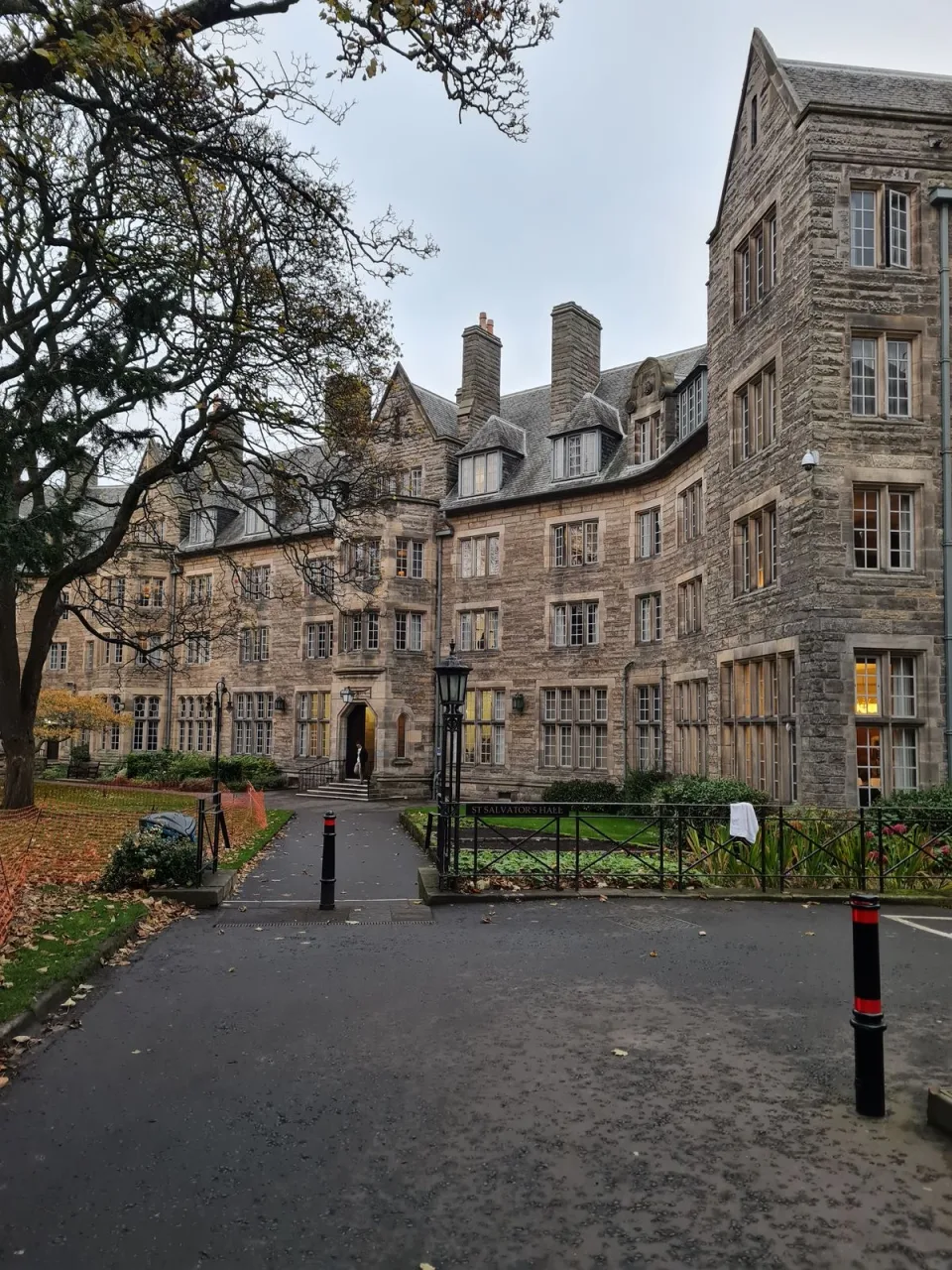
I’m sitting in a growingly loud pub across from two people I would have never considered interacting with a few years ago. To my left, a friend who grew up in Houston, Texas, and to my right, another friend that grew up in San Diego, California. Americans here are a casual part of the picture in St. Andrews: they walk the three streets, are in the libraries, lecture halls, labs, houses, and pubs. They’re infused into the framework of the social order that is ‘the bubble’. I confess, before I came to this town, I carried an unnecessary dislike for all kinds of Americans. Such was the nature of growing up not only in Scotland, but in a city which was constantly filled and badgered with tourists, a majority American, year round.
When I began university, a switch was flipped for me, as I entered a microcosm dominated by the American students bringing over their culture, their accents, and of course, their money. It was the culture shock of a lifetime for my very sheltered mind at the time, the jump between the tone of an East Coast to the sometimes rare drawl of someone from somewhere in the valleys of America. I didn’t know how to converse with people who felt so uncorporeal to me, so distant, both in culture and in class.
Mo and Cameron are not these Americans. They are, interestingly, much the opposite in many aspects as ‘American’ students attending St. Andrews. They are also the reason I have any tolerance towards Americans these days. Count your lucky stars I like you a little bit, yankees.
Both of them immigrated to Scotland in the last six years, Cameron from Texas when they were fifteen, and Mo making the decision when she came over from California as a student in 2024.
Jay: How was that decision made, to fully emigrate here? Was the plan to always move out?
Mo: “It was something I was always thinking about when I was applying to university. I applied to a few schools in the States, but I was mostly looking at universities in the UK. It was a conversation I was starting to have with my parents when I was writing my personal statement, and when I finally got here, I told them over the phone that I was probably going to stay here for good. It obviously helps that I have a British passport from my parents. But I knew for a while I wasn’t going to come back home in the same way ever again.”
Cameron: “My mom moved my sister and I back to Scotland, cause that’s where she’s originally from. She actually moved partly back for work, which is ironic considering that she originally immigrated to the states after she got married. I think I found it much harder than my sister did, who is pretty much Scottish in attitude and culture, despite us living in Texas for over a decade. Adjusting to school life was particularly difficult, especially in the area of Scotland where we first moved to.”
J: How did it feel when you first came over? How does it feel today?
Cameron: “It was definitely strange. I’m from Texas, and I would consider myself to be pretty friendly and open about my ideas and opinions, which was apparently not taken well in my school in West Scotland. The social dynamics were strange and very closed off in a lot of ways. I got a lot of flack for just being American, which felt unfair, because hey, I can’t really help that! They would make all these jokes about school shootings to me as a counterpoint to me just talking back about whatever, which was incredibly hurtful, because at that point I had recently been in a school shooting back in Texas. It wasn’t a joke to me, which they didn’t realise. I don’t think they could really comprehend it. It was even more ironic and confusing to me, because the school I went to was near the Dunblane school where the famous shooting had happened.
I’m proud to be Texan, I consider where I’m from to be open and friendly, very liberal. I had a diverse group of friends back in the States, most of them being Mexican or other people of colour, pretty much all of us were queer. I think I was probably one of the only white people in the friend group. So when I came over to Scotland, the difference was staggering. It’s very much a cliquey energy with all the friend groups in high school, which was very passive aggressive and also confusing. People would talk behind their so-called ‘best friend’s’ backs and then shun others. There was very much a leader with a pack hierarchy, which I just found really odd. I was really glad when I came to university. In that aspect, having a large American demographic definitely helps a lot with how I’ve found friends here. Which isn’t to say that I don’t have Scottish or other British friends, but having that similar style of socialising felt good.”
Mo: “It was definitely interesting. I knew about the large demographic of Americans here from my previous research into universities. That was part of the process when I was looking into unis here, which one I thought I was going to be able to manage to be in. I think that aspect sorta appealed to me in a way. I know I’m quite loud and boisterous at times, let’s say, and so I think it made it easier to fit in. Not so much for you I imagine,”
Jay: “Oh yeah, not at all. I guess when Scottish students make up barely a quarter of the demographic here it can feel quite isolating. It kind of felt like America central in a way. I thought I was on East Coast or New England, even though I’ve never been there,”
Mo nods her head in agreement.
Mo: “I definitely feel it with my coworkers, who are mostly Scottish. At my current job, when they first met me, they all immediately assumed I was just this stupid annoying American girl who’s here to earn an extra bit of cash. I think that they fully accepted me when they realised I was actually earning money to pay rent over the summer and that I was living in Scotland full time. In that way I think the divide wasn’t necessarily an American versus Scottish culture but more of a class thing, which is glaringly obvious at St. Andrews.”
Jay: Did you find the transition to life here easier because of the American demographic of St. Andrews?
Mo: “For sure. It was kind of comforting in a way to see a lot of Americans like myself here. But, there’s definitely a disconnect in other ways. The amount of very privileged, privately educated kids here is definitely something. It’s a very interesting mix here that I don’t think I would have experienced if I had gone to somewhere like Edinburgh or Glasgow.”
Cameron: “It was an interesting transition for me in other ways, as I worked in corporate for two years straight out of high school before coming here. Which in itself is crazy because that would be impossible back in the States. To go straight into a finance job right out of high school? It would have taken at least a couple internships and other work experience before you could even think about entering the job market. So that was nice, because I made a lot of different friends from different age groups.
Coming to St. Andrews was nice in that way where I guess people have some sort of shared experience. For a long time, my sister and I were the only Americans we knew in the town in West Scotland we grew up in, and especially for me, I felt not so adjusted to the country’s culture like she did.”
Cameron and I ended up in a long discussion about the social culture and high schools in Scotland, which we both agreed to be a strange environment from our own perspectives. Similarly, we brought these same perspectives to the often strange ‘bubble’ that makes up the university town. The microcosm that is so often self perpetuating, with its expectations, attitudes, social rules. It was another adjustment we both had to learn to make, coming from small towns in Scotland.
Jay: How do you negotiate, or deal, with your American identity here?
Cameron: “There’s this really good quote from Giovanni’s Room by James Baldwin that I think really encapsulates how I feel,”
They pull out their phone to show the quote.
‘When Giovanni wanted me to know that he was displeased with me, he said I was a “vrai americain”; conversely, when delighted, he said that I was not an American at all; and on both occasions he was striking, deep in me, a nerve which did not throb in him. And I resented this: resented being called an American (and resented resenting it) because it seemed to make me nothing more than that, whatever that was; and I resented being called not an American because it seemed to make me nothing.’
Cameron: “That’s exactly how I feel, when someone reduces me to my American identity. I love being Texan, I take pride in it. But at the same time, it’s like I’m shrunk, reduced into just this sort of caricature of a person, of the international gaze of ‘the American’. I hate it. I know I’m American, I know that’s part of me. But it shouldn’t be the only thing that people see me as. I am a multi-faceted person.”
Mo: “I love being from California. I’m proud of my city and think the state itself has so much to offer. The food, the beaches, the people. Sure, everywhere has its problems, but I’m still very proud to be Californian. I think it’s also interesting for my sisters who were also raised there, since both my parents came from other places. My mom’s originally from the East Coast, and my dad immigrated from England nearly thirty years ago. They definitely have their own feelings about moving, and I think recently with what’s been happening in the States, my dad has been thinking a lot about the UK. But it’s definitely a unique experience here in St. Andrews. I don’t know if I would have felt as comfortable in my American identity if I had been at a different university in the UK,”
Jay: “You would have been eaten alive,” I joke.
Mo smiles and then laughs.
Mo: “Probably. So that’s a good thing about this place. It is mixed, very American as well, but I feel like I have a good mix of friends here.”
Jay: Do you miss America?
Mo: “Parts of it. I think more than anything I really miss my family. I call my sisters all the time and try to keep in touch with my mom and dad as much as possible. It’s definitely harder for me now that I’ve made the permanent decision to stay here. I for sure miss all the food places I used to be able to go to in California. God, it was so good! There’s a lot of Mexicans in that area and we live near the coast, so lots of seafood as well, which was obviously incredible. It’s definitely an absence which I’m feeling here,”
Cameron nodded rapidly in agreement.
Cameron: “God yeah, the food is something I missed the most. I’m from Texas, and we’re obviously well known for our barbecue, beef brisket and things like that. There are a lot of spices which you can’t get the same way here. And definitely my friends as well. That was something I missed a lot, especially in high school in Scotland, having that easy dynamic which wasn’t so easy here. I think there’s a lot of good people in Texas, and America, and it just makes me really angry in so many ways that what’s currently happening feels like it's defining the people of the country. It’s so different from what people here might see over the screen.”
Jay: If politics was to feel hopeful in the US again, would you go back?
Cameron: “I don’t really have a desire to settle back in Texas or anywhere else in the States. I definitely want to move and get out of the UK for a bit, but I’m even thinking of retiring here in Scotland,”
Jay: “If it’s not too much to ask, do you ever feel guilty for being over here in the UK, watching everything happen over in the States right now?”
Cameron: “In a way. I see everything that’s happening with immigration and data centres and it makes me feel really…odd. It’s definitely kind of like survivor’s guilt. I have a lot of friends who came from undocumented families or were just part of some minority group, so seeing everything online and talking with them has been quite harrowing. I get worried all the time and emotional and upset. It’s just a lot of complicated emotions because I should feel lucky to be here, but I feel this need to go back and help. I always try and think about what I can do from where I am right now.”
Mo: “I probably would move back. I mean, more than anything, I’d want to be back with my family. I have quite a large extended family back in the States, which I got to see for probably one of the last times fully together last Christmas. Like I said, there’s so many things about California which I love, but where America is right now, it’s quite a contentious relationship. I miss parts of it, the people, the friendly culture. I think I miss that hopeful feeling that used to be around. Now when I talk to my sisters, it’s a different atmosphere over there. As soon as both of them graduate, my parents will move over here as well, so I’m looking forward to that. But yeah, I’d probably go back. I love California, I love my home.”
America for myself is still, so often, a faraway place, a sort of distant unreality. In many ways at St. Andrews too, this feels amplified to a near ridiculous extent. Are the Americans that line the library and roam these streets a true representation of the United States? Likely, no. But talking to Mo and Cameron, hearing about their daily lives back in Texas and California, their families and friends, the little things they miss, ground them in an America I can imagine. I just hope they find that sense of home not just perhaps, within each other, but in the place they’ve chosen, for better or worse, to make that home too.
Many thanks to Mo and Cameron for taking part in the interview.
By Jay Dancu Inamdar · posted 17 October 2026 · edited by Joseph Wear The views expressed in this article are the author’s own, and may not reflect the opinions of N/A Magazine.