Opinion Pieces Season 6, Issue 1
BookTok: Is it ruining literature?
BookTok is a subcommunity on TikTok where people post all things books. From book reviews and recommendations, to discussions and reading recaps, it is a place that brings readers together. But with the rising popularity of the Romance and Romantasy genres it has also become increasingly divisive. While staunch opposers slate the community for poor writing and anti-intellectualism, its defenders clap back with accusations of pretentiousness and misogyny; in one one Substack article I read, a girl linked the popular hatred of BookTok with the ‘#riseoffascism’. Needless to say, people either love it or hate it.
Admittedly, the last time I scrolled through BookTok was several years ago – and not without success. While the recommendation of Colleen Hoover’s It Ends with Us did not go down particularly well with me, others such as Donna Tartt’s The Secret History, and Kathleen Glasgow’s Girl in Pieces, certainly did. I got a lot of enjoyment from reading books that everyone was talking about, especially when they pushed me outside of my usual genres.
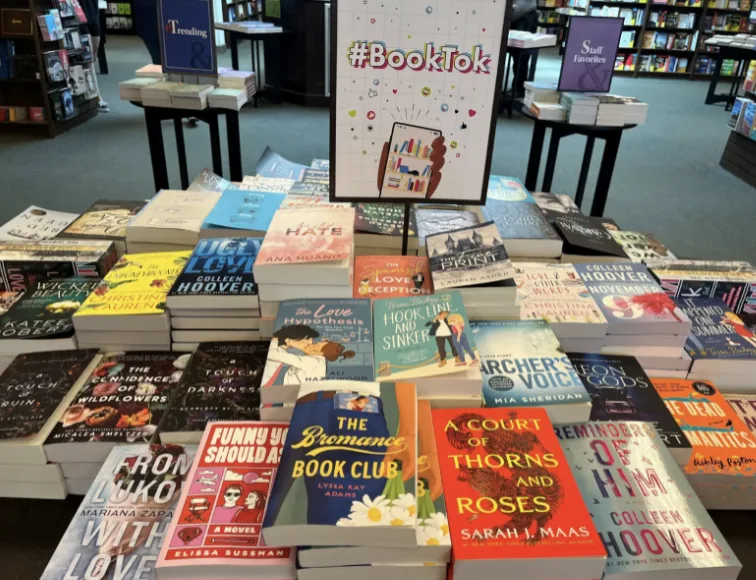
But there has been an undeniable shift in the past couple of years that even those without a TikTok presence could observe. Shops like Waterstones started introducing ‘#BookTok’ tables to their stores, and even created new categories on their websites, to accommodate the community’s growing popularity. The supermarket bookshelves that used to be so reliably dominated by Crime Fiction were suddenly replaced by authors such as Colleen Hoover and Sarah J. Maas. Rather than just being genres on BookTok, Romance and Romantasy suddenly became the genres of BookTok.
After reading a few of the books on these tables, and skimming many more, I began to develop a not so quiet disdain for BookTok. Most of the books I tried I found to be poorly written, and one too many encounters with a deeply unlikeable character or cringe-worthy sex scenes were enough to put me off. But why is this important? There are many genres I don’t enjoy that I’ve simply moved on from, but why not BookTok books? Why is it bothering everyone so much?
I read some Substack articles to get a general sense of the arguments held by the vehement haters and the firm defenders of BookTok (there really is no in-between), and besides being incredibly entertaining reading, it provided me with some food for thought. Something that came up again and again was BookTok’s ability to grasp the attention of young people who may not have become readers otherwise. This is a view that has made its way into academia too, with educators like Sarah Jerasa and Trevor Boffone suggesting that BookTok could be used as a learning tool in schools because it promotes deep engagement with texts. Putting aside my general concern that employing phones in schools would be disastrous, their proposals highlight some of the intellectual benefits of engaging with BookTok. Reading books and discussing them has become popular again – hooray! As a book nerd that grew up fearing my mother's dystopian predictions of a future without physical books, this should have been good news.
But the BookTok videos I've watched don’t actually seem to be promoting deep engagement at all. The videos that get the most attention tend to be lists of books a person has read, emotional reactions to dramatic scenes, and ‘hot takes’. Most of these videos don’t require anything other than a surface-level reading. One outrageous video that went viral in 2024 was of a BookToker complaining the book she was reading had ‘too many words’ on every page, and while this certainly isn’t representative of all BookTok users, it does point towards the types of videos that get the most views. Besides this, many BookTok influencers are actually hired by publishers like Penguin Random House to review books sent to them, making their videos more about marketing than genuine textual engagement. BookTok rewards a large volume of content with high levels of engagement, meaning that reading books faster and sharing opinions that will draw in the greatest number of views becomes the priority.
One of my friends asked: “Is reading these books any better than just scrolling?”, and I thought about it for days afterwards. BookTok’s ability to encourage people away from their phones and towards books should be applauded, but these books seem to be focusing on sexy romantic tropes and graphic sexual content at the expense of the things I find so valuable about reading: the ability to develop your empathy, open-mindedness, critical thinking and general intelligence.
I have come to the conclusion that we are using BookTok as something of a scapegoat for a bigger issue. I believe that it’s important to do things we enjoy just for the sake of enjoying them, and if it is a book then even better! I think it has acquired so much hate because it has taken something seen as inherently intellectual, like reading a book, and used it purely to entertain. Other forms of entertainment like watching movies and TV shows, and the mindless activity of scrolling through TikTok, escape this accusation because we know that they are things we do for fun. BookTok is just another part of a bigger trend of developments that allow our critical thinking skills to lay discarded in a forgotten corner of our brains. Social media has encouraged the polarisation of political opinions, and the dissemination of fake news and rage bait, and now we can use AI to generate ideas for us. The world seems to be rejecting deep thought in favour of the easier option.
Books are undoubtedly where I exercise my ability to think critically, but it doesn’t need to be everybody’s. You may prefer debating, following up on ridiculous news stories, or even engaging with people’s emotionally driven arguments on Substack (trust me, there’s a lot to work with on there). What is important is that we all find a way to preserve this skill, because we will become incredibly vulnerable if we lose it.
By Abbi Mcdonald · posted 17 October 2026 · edited by Beth Hodgson The views expressed in this article are the author’s own, and may not reflect the opinions of N/A Magazine.