Fashion & Beauty Season 6, Issue 2
I’ll have the lipstick
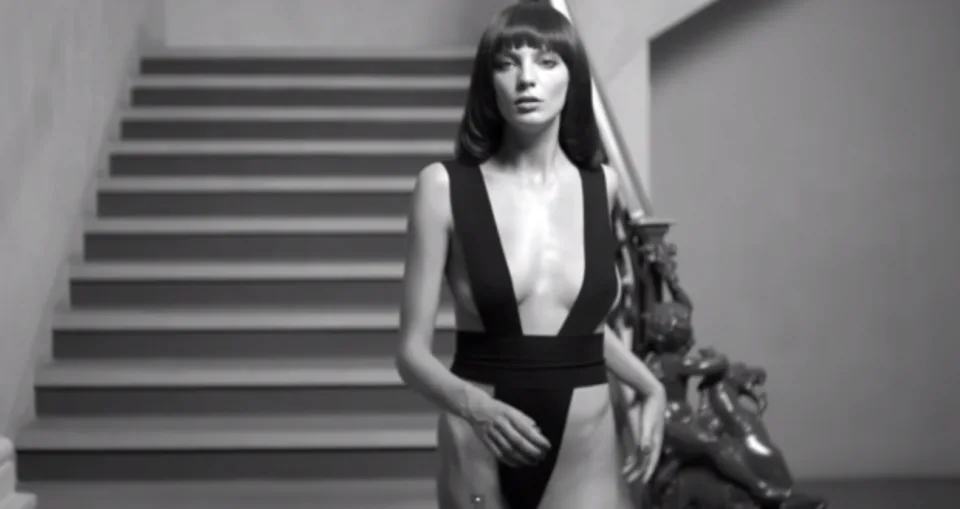
Gone are the carefully curated beige aesthetic images. All we see this fall are bold colors, fur coats, and layered jewelry stacks. After years of carefully curated pastel perfection, fashion seems ready to roar again. We said farewell to the slicked-back buns and ChapStick lips. So long to the neutral matching sets and asylum-beige everything that once flooded our feeds. All we've seen these past few months are bold colors. Deep browns, flashy burgundies, daring greens — all framed by fur coats, cheetah prints, and outrageous stacks of layered jewelry. Bright lipstick, huge voluminous blowouts, and sharp nails.
Even British Vogue seems to have had enough. In May 2026, Osman Ahmed published an article aptly titled “This Is How I’m Rejecting The Clean Girl Aesthetic,” documenting the triumphant return of unapologetically bold makeup on the runways of Rick Owens, Simone Rocha, Luar, and Thom Browne.
And the appetite for excess only seems to be growing. And British Vogue is hardly alone. In October, Vogue Arabia also pointed to the return of maximalism, citing an analysis of over 10,000 autumn/winter 2026 runway looks by Heuritech, a fashion trend forecasting company. It seems the shift goes well beyond a few isolated collections.
But how did we get here? How did we go from worshipping quiet luxury to embracing everything it once taught us to avoid? And more importantly, why now?
According to Bain & Company, the number of active luxury buyers fell by 17.5% between 2022 and 2025, dropping from 400 million to 330 million. Seventy million people, gone. And yet, sales have barely budged. Its wealthiest customers now account for over 46% of luxury spending, up from 30% in 2019. Quite the paradox, then, to see the aesthetics of extravagance being sold to the masses as the luxury market becomes an increasingly exclusive club.
Since 2019, prices for some of luxury's most coveted products have reportedly climbed from 50 to 70%. Moreover, over 80% of the growth in global personal luxury goods sales between 2019 and 2023 came from price increases rather than higher sales volumes (according to McKinsey). A rather convenient business model. But guess what? Luxury's price elasticity isn't the same for everyone.
Of course, some of these price increases reflect broader inflationary pressures. But most of the escalation is driven by the industry's own appetite for repositioning and premiumisation. And this is happening in a less-than-comfortable economic backdrop: eurozone inflation reached an estimated 4% in October 2026. Luxury's own price increases have only added another layer to the squeeze. Tragically, the price of looking wealthy has been rising considerably faster than the cost of living itself.
For aspirational consumers — the ones saving for months to afford a designer purchase — that market has become too hard to keep up with (according to the Financial Times). And would you believe it? Just as these buyers are being priced out of the luxury market, being loudly, unapologetically ostentatious is fashionable again. Well, well, well. Coincidence? Perhaps — but I think not. The timing seems too convenient to ignore.
Consumers are caught between the rising cost of living and an increasingly inaccessible luxury market. The desire for beautiful things hasn't necessarily disappeared. The ability, or willingness, to pay for them might have. Bain reports that jewellery and smaller indulgences, for instance lipsticks, have been the only categories contributing positively to the growth of the personal luxury goods market since 2023.
Over a century ago, the economist Thorstein Veblen was already onto something. In his 1899 book The Theory of the Leisure Class, he explained that consumption was never just about what we needed, but also about what we wanted others to think we could afford. As he put it, “The wealth or power must be put in evidence.” Apparently, looking wealthy is not a modern preoccupation.
Now, yes, wealthy consumers are still buying luxury. Yes, maximalism could simply be the next chapter in fashion's endless cycle of loving, hating, and eventually rediscovering the same things. And no, European inflation figures cannot explain a worldwide aesthetic shift. But the contrast remains striking: at a time when luxury is becoming harder to access, its visual codes seem stronger than ever. It seems to me that the return of maximalism isn't a reflection of how wealthy we are, but of how wealthy we still want to look: Veblen was right!
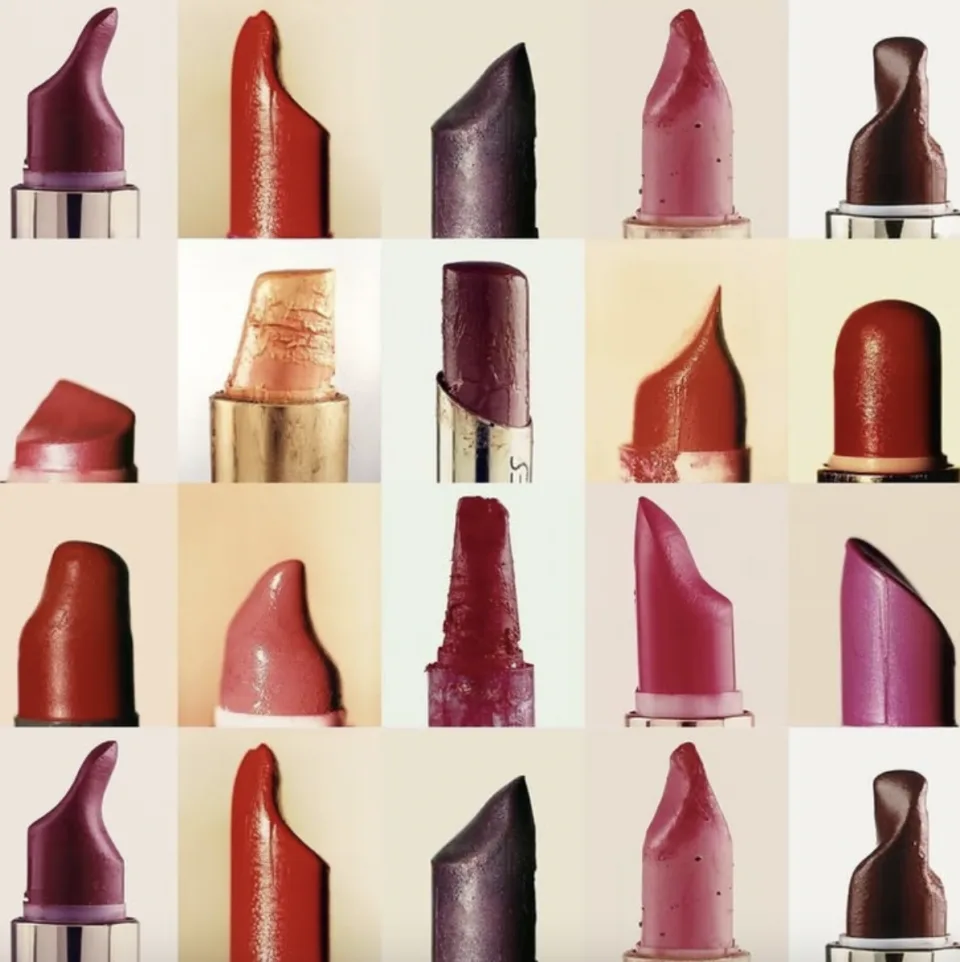
And if we can't afford the bag anymore, well, we'll have the lipstick.
No breaking news here. Back in 2001, in the aftermath of 9/11, Leonard Lauder, then chairman of Estée Lauder, noticed that lipstick sales were paradoxically rising while the economy was struggling. He called it the lipstick index. The theory? When money gets tight, we trade the big luxuries for smaller, more affordable indulgences. The handbag I want costs 4 months of rent? A new lipstick will have to do.
And the numbers seem to play along. According to Circana, prestige lip products saw a 19% increase in US sales in 2024, while Bain reports that smaller indulgences, including beauty, have been among the few categories keeping the luxury market afloat. Even academics have taken an interest. In 2012, researchers Hill et al. found that reminders of economic recession could increase women's desire for beauty products, even as their appetite for other purchases declined.
So, is lipstick recession-proof? Not quite. For one, the US wasn't in a recession in 2024. As for Hill's study, it tells us something about what women say they want to buy, not necessarily what they really end up buying. A compelling theory, certainly. A reliable economic indicator? That's another story.
And lipstick isn't the only item in our wardrobes supposedly Keeping Up with the Economy. There's also the hemline index, which claims that skirts get shorter when the economy is booming and longer when things go south. Apparently, we've been looking for economic forecasts in our closets for quite some time.
Of course, it would be convenient if fashion worked that way. A recession here, a longer skirt there. A little inflation, a little more lipstick. But fashion has its own reasons for changing its mind. Is it a deliberate switch lead by the Maisons de Haute Couture to revive their image? A Social media mania? Nostalgia, marketing, or simply the collective exhaustion of looking at the same crème outfit for the fifth year running? Not every trend has an economic explanation.
Still, the timing is hard to ignore. As luxury becomes increasingly inaccessible, fashion seems determined to look more extravagant than ever. Maybe we're not buying more luxury. Maybe we're just borrowing its codes. After all, the fur can be fake, the jewellery can be costume, and the lipstick can come from the drugstore. Who's checking?
Perhaps maximalism isn't telling us how much money we have, but how much we wish we did.
Are we dressing for the economy we live in, or the one we wish we had?
Either way, I'll have the lipstick.
By Capucine Puiseux · posted 27 November 2026 · edited by Beth Hodgson The views expressed in this article are the author’s own, and may not reflect the opinions of N/A Magazine.