Opinion Pieces Season 6, Issue 2
Black Friday: Can we afford our identity as consumers?
‘Hurry, Hurry, Hurry’ ‘Biggest Sale’ ‘Early Access starting now’
In the last few weeks, you’ve likely been bombarded with notifications urging you to sign up for Black Friday sales or a barrage of offers dominating your inbox. Black Friday sales anchor fourth-quarter finances, yet retailers appear more desperate than ever.
Originally coined in the 1950s by city workers to describe the chaos in downtown Philadelphia following Thanksgiving, retailers capitalised on the opportunity to turn heavy foot traffic into profit, marking the day as the beginning of Christmas shopping. This commercially engineered holiday has since grown and transformed in scale. With the expansion of online shopping, the sales were utilised by global companies to drive up profits and reach beyond traditional doorbusters. Further, with Cyber Monday introduced in 2005, the dates have become increasingly blurred with sales now extending across the week and some brands even offering a fortnight of discounts. Now far more than a uniquely American phenomenon, Black Friday is transforming global shopping patterns.
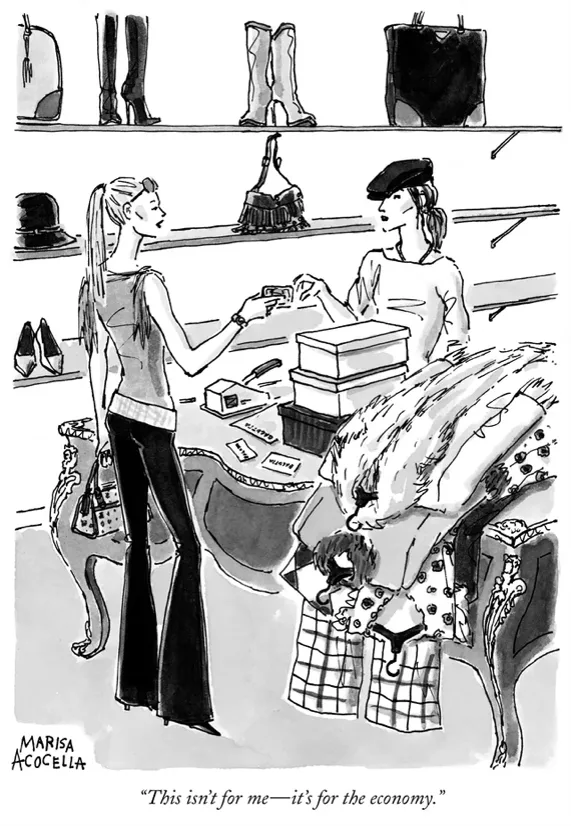
The day has evolved from merely marking the start of the Christmas season to now representing key indicators for economic health and consumer patterns. It is now a financial staple that yields remarkable power – such that despite any moral concerns, can the economy afford for Black Friday sales to slow down?
But why is Black Friday so widespread? Black Friday marketing puts consumption under pressure and creates an impetus for impulse spending. Marketing plays with our psychology, creating a sense of urgency and scarcity and engineering a sense of competition. A fabricated FOMO - we must buy now otherwise we will miss out. Such misleading communication appears especially underhanded once you realise Black Friday is a con, with brands manufacturing ‘fake sales’ as prices rise before an artificial drop. Further, the sense of scarcity causes momentary amnesia in the consumer as they forget that these products have been on sale throughout the year, often at a lower price.
More than this, AI is changing the rules of Black Friday. Algorithms and AI are shaping consumption habits, with a report from salesforces anticipating that 20% of holiday e-commerce traffic will originate from AI chat agents this year. With such technology playing an increasingly large role in online shopping, traditional marketing techniques no longer guarantee visibility and brands have limited control over how their products are presented. It is becoming increasingly difficult for lesser-known brands to compete alongside established brands that are more likely to be recommended in non-specific queries. These statistics show the unmistakable direction that consumption patterns are heading and the need for brands, especially small brands, to adapt. This should also serve as a reminder to consumers to look beyond the big brands and get specific if they choose to use AI for their shopping.
Furthermore, a report from DHL highlights that AI-Assisted shoppers are spending more than traditional deal seekers. Given the environmental implications already embedded in AI agents, such statistics raise the question; can we afford these expanding patterns of consumption?
So, pause before you purchase or use ‘girl math’ to justify that new product. Ask yourself if this is logic or if this is a ploy of Black Friday FOMO - being financially intelligent will always be more stylish than another pair of shoes.
By Millie Barker · posted 27 November 2026 · edited by Nadja Zevedji The views expressed in this article are the author’s own, and may not reflect the opinions of N/A Magazine.