Opinion Pieces Season 6, Issue 2
Is Girlhood the Most Profitable Marketing Strategy of the Decade?

Between expensive Pilates classes and increasingly elaborate skincare rituals, it appears that being a girl requires more work than ever. There's a lot of energy going into the topics of girlhood and traditionally feminine aesthetics - and rightfully so, especially when it comes to the various things women have been taught to be ashamed of. But there is something truly interesting about how much of this newfound enthusiasm seems to come with its own list of products you should buy.
The beauty and fashion industries have been exploiting the connection between womanhood and appearance for as long as they have existed. But what is new here is the way in which these companies have been able to position themselves within the cultural discussion around femininity. These products are now being marketed not as remedies for insecurities, but as forms of empowerment. Two brands in particular whose marketing campaigns illustrate this are Glossier and Dove.
Glossier's success has never been entirely about its products. In fact, the brand was founded by Emily Weiss in 2014, growing out of her existing platform, Into the Gloss. This was a beauty blog that invited women to share their tips, tricks and routines. Appropriately, Glossier positioned itself as a brand that listened to its consumers. These consumers became part of its narrative by reviewing its products, taking photographs and suggesting other products they felt the brand needed to have. Harvard Business School did a case study on Glossier, describing this approach as a model built around co-creating a brand with its digital community.
This is where the idea of collective identity comes in. People often build a sense of identity around the things they have in common. Glossier offered such a community with its distinct style of fresh skin, pink packaging and a 'woke up looking like this' appearance. Buying Glossier was therefore about more than the product itself - it also offered a sense of belonging. The customers spent their time helping produce the very products that would eventually be marketed and sold to them. For instance, when developing its Milky Jelly Cleanser, the company collected opinions from readers on their ideal face wash, receiving several hundred responses.
Through this communication strategy, Glossier managed to present advertising as a series of ordinary social interactions. Someone posting their favourite shade of Glossier's Cloud Paint might seem to be sharing a personal recommendation rather than promoting a company, which is precisely what makes those recommendations so persuasive. The brand effectively used female friendships and bathroom stall conversations about lip gloss as commercial stepping stones. Its customers gave it the content and word-of-mouth that helped increase its visibility.
There is also a slightly ironic side to this relationship, which can be understood through the idea of aesthetic labour. This is the time, money and energy people invest in their appearance, particularly for social approval. In her 2019 study of contemporary fashion and beauty brands, researcher Rosie Findlay explored this concept, and the idea of 'aspirational realness'. The term describes how a brand can make its customers feel as though they are looking at people just like themselves, while still giving them an identity to aspire towards. Rather than being bombarded with editorial shoots of supermodels, Glossier's customers were presented with an idealised version of the effortless girl next door. The look felt so accessible that it was all the more tempting to buy into.
The global personal care brand Dove offers another example. It has built its brand identity around challenging unrealistic standards that make women feel inadequate. Its long-running 2004 Campaign for Real Beauty spoke against narrow representations of female beauty. More recently, their short film The Cost of Beauty (2023) used a young woman's photographs, videos and diary entries to show how harmful online beauty content had affected her relationship with her appearance.
The campaign was as emotionally powerful as it was carefully curated. By connecting Dove to a wider social issue, the brand strengthened its reputation as an advocate for women’s self-esteem. This is an example of purpose-driven branding, where a social cause becomes central to a company's identity and public messaging. Campaign reporting attributed 6.6 billion US impressions and a 5.5% increase in value sales to The Cost of Beauty. Two things can be true at once: that the campaign genuinely raised awareness and that it was particularly good for business.
So no, Dove's message is not necessarily insincere, and Glossier is not fooling its consumers. It's worth asking, though, why empowerment has become such an effective selling point in the first place. This is where the social comparison theory comes in,where people compare and “fix’ themselves by looking at the people around them. Brands know how prevalent this is in the digital era, and use it to their advantage. Some encourage women to question the beauty standards they've grown up with, while others sell products that help them get closer to those same standards. Sometimes, the two approaches exist side by side.
These strategies are easy to monetise. The ‘pink tax’ refers to the price differences between products marketed towards women and men. Research published in Marketing Science in 2023 found that women-targeted products were more expensive in certain categories (although this wasn't true across all self-care products). The same basic item can come in over-the-top packaging, five different scents, and hiked prices, simply because it is being sold to women. Aside from that, it also becomes about how many things they are expected to spend it on. There seems to be a product for every part of being a woman, from skincare and haircare to body care and the countless little extras that are supposed to complete the look. Femininity has become something that can be sold in an awful lot of different ways.
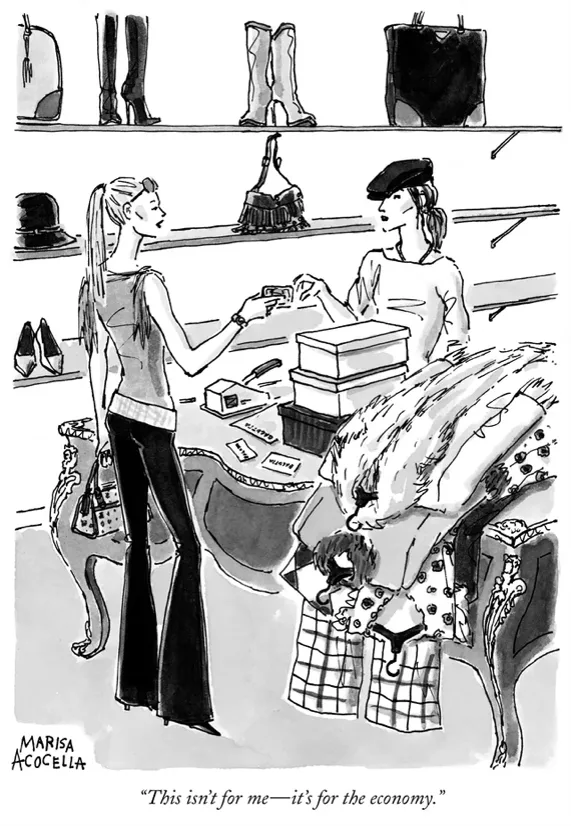
There is something quite refreshing about celebrating femininity without feeling the need to apologise for it. Sometimes, though, that celebration starts to feel like another thing we have to spend money on, something many women do not have the privilege of being able to do. Brands have found a way to make shopping feel like part of embracing who we are, but surely we shouldn't need to buy quite so much to feel comfortable in ourselves. After all, if being a girl is meant to be about embracing yourself, why does it come with such a long shopping list?
By Lakshita Popli · posted 27 November 2026 · edited by Abbi McDonald The views expressed in this article are the author’s own, and may not reflect the opinions of N/A Magazine.