Cyberpunk Edgerunners: Hope in Dystopia
Spoiler warning for Cyberpunk Edgerunners
When looking at the dystopian world of Cyberpunk, it is easy to compare it to ours. Is that not the point of dystopia anyway? Cyberpunk, with its technology-based genetic modification and stark economic disparities, seems to be creeping closer and closer to reality. This frightening prospect can be seen in the well-known words of Cyberpunk co-creator, Mike Pondsmith, Cyberpunk was a ‘warning, not an aspiration’.
The recent release of the second season of Cyberpunk Edgerunners highlights this through a cast of characters struggling with eerily familiar issues. Focusing on the three of the protagonists from the second season, they provide a nuanced form of commentary on prevalent issues in our society. Despite the bleak issues tackled and the infamous tragic ending of the first season, Edgerunners’ second season winds its commentary together with a much needed thread of hope.
Talia’s struggles with a terminal illness depicts this idea perfectly, providing a hopeful outlook on the importance of life while also highlighting the increasing disparities in access to healthcare. Initially appearing as a carefree ‘corpo’ (rich) kid just as obsessed with the world’s ‘chrome’ (genetic modifications) as most others, the reveal of her terminal illness provides both a depth to her character, and an opportunity to provide commentary on the implications of advances in genetic modifications to the healthcare industry itself. Particularly, the use of ‘Soulkiller’, a procedure which could digitise a person’s consciousness and transfer it to another body, at the expense of their own life, encapsulates this. The idea that some could transport themselves into another, better body with enough money highlights the issues of wealth inequality within healthcare - for the right price you can live whilst others die. Despite this, the most memorable aspect of Talia’s journey was her relentless desire to persevere, without the costly treatment.
Her final scene, as she and Kingsley drive away from Night City, contrasts with the chaos of the earlier scenes in the episode. In this, the series demonstrates how Talia got rid of her modifications to instead live out the rest of her life in a possibly shorter, but more peaceful and human manner. This opens up discussion onto the increasing study into genetic modification in humans, questioning the dubious ethical implications of changing human genetics in an attempt to improve them. Alongside this, the ending in which Talia rejects these modifications is portrayed in a manner that still provides hope. The father-daughter relationship that has been built between Talia and Kingsley through the show is used to create an ending for Talia that highlights the joy she has managed to find despite her tribulations. Her journey emphasises the importance of perseverance in the face of hardship, and utilises this to end her story on a hopeful note.
The journey of D, on the other hand, is more reminiscent of the anti-corporate rebellion seen in the first season. His need for revenge against Arasaka after he finds out their responsibility for the massacre of his clan outlines the typical dystopian trope of rebellion against the evil entity responsible for the rampant inequality. However, it is the documented violence of this revenge, and the widespread support it garners, that proposes the most interesting question - what becomes too far in the name of change? Combined with D’s increasing disassociation from reality as Capri (a construct built from consciousness’ harvested in the Soulkiller programme) affects his mind, it plays out as more of a declining than a progressive movement. This begins to beg the question: is the widespread support just an attraction to the violence, rather than genuine interest in the movement? Whilst the series highlights the need for rebellion against inequality and corporate immorality, it also highlights the importance of maintaining a certain humanity.
The can be compared even to historical protest movements, such as the French Revolution, where what was originally a class based movement against the monarchical regime turned into hysteric violence during the Reign of Terror. The show does not answer the question itself, and instead allows audiences to consider where they would draw their metaphorical line.
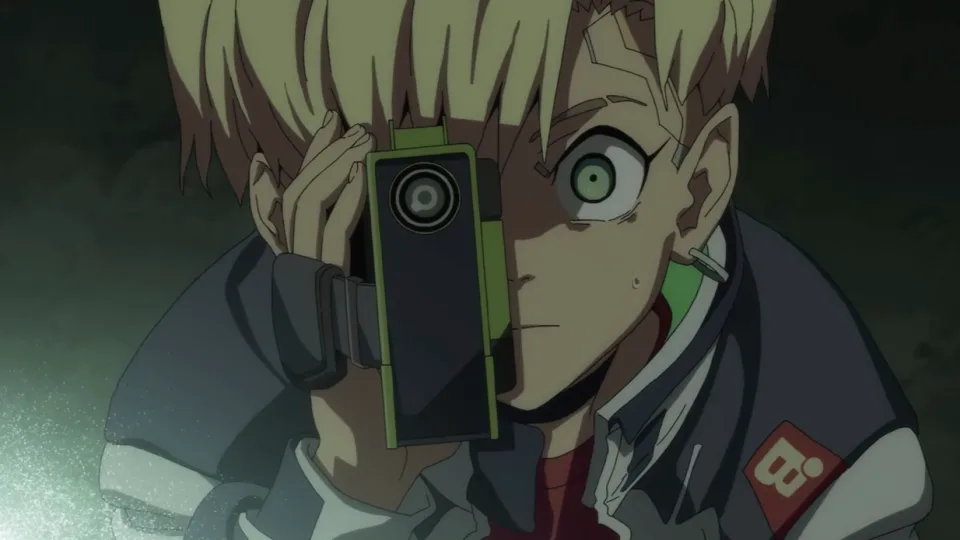
The end to D’s story, as he is killed in the struggle with Arasaka, is hard not to compare to the end of season one - even the series itself directly highlights the parallel between this D and the David of the previous season through its brief callbacks. However, unlike the first season, the underlying thread of hope is brought forward by the younger Roman as his desire to share the stories of those around him, along with his basic survival, represents a chance for the future. Roman, who documented D’s journey throughout the season, serves as a medium to carry on the ideology of hope long after D is gone.
Roman’s obsession with the declining medium of film lends itself perfectly to contemporary arguments about the decline in art and cinema since the widespread introduction of generative AI. The incredible animation, through the lens of Roman’s camera, creates scenes that bring the hand-held, cinematic medium within animation, even more to life. The introductory shots of Talia in episode two ‘Give Me Another Day’, highlight the beauty in the authenticity of human-made art. This love-letter to film is incredibly refreshing, as animation increasingly turns to cheap AI software to create both lackluster and disappointing media, mirrored in through the sharp turn away from cinema in the series itself.
Alongside this, Roman’s documentation of D’s rebellion highlights how media can be used to present an important message. Like Cyberpunk itself, media has historically been used to critique contemporary issues. In the age of generative AI for both media and education, it can appear that such nuanced outlooks on art are becoming increasingly scarce. Roman’s passion for not only cinema, but his use of it to tell real stories, provides a hopeful look for the potential future of art.
The overt hope communicated by the end of the final episode was not only a surprise to myself, but audiences at large. Theories leading up to the second season focused on ‘who would die first’, or even ‘would anyone make it out alive’ after the tragic and sudden endings to the first season. This balances with the social commentary to offset the bleak futility often associated with Cyberpunk’s technological dystopia. As the characters work against these seemingly overwhelming societal issues, the ending combines the paradoxical futility and hope to create a story that shows hope is important to rebellion, even if it might seem futile in the end.
By Jessica Thompson · posted 27 November 2026 · edited by Joseph Wear The views expressed in this article are the author’s own, and may not reflect the opinions of N/A Magazine.