Productions from Hell
If you’ve been following the recent news regarding Peter Safran and James Gunn departing from DC Studios, chances are you, like many other fans of the DC universe, are majorly disappointed, but not at all surprised. Reportedly, Skydance wasn’t particularly happy about the box office returns, and alongside that, Skydance’s CEO David Ellison allegedly had other creative ideas for the cinematic universe. Even if you’re used to DC shooting themselves in the foot every so often, you at the very least wouldn’t expect them to leave Matt Reeves’s Batman trilogy unfinished. After all, if they were only looking at numbers, THE BATMAN (2022) managed to gross well above double its $200 million budget, with many claiming Reeves’s interpretation of the Caped Crusader is by far the best and most accurate version we’ve gotten in theatres so far. That being said, I can’t help but ask myself why they would potentially cut off another piece of the money-making machine. Could it be the constant delays that pushed the movie back from October 2025 all the way up to February 2028? Or is it the fact that Jeremy Latcham’s grandma wouldn’t approve of the gritty scripts? We simply may never know. I think it’s only fitting that we look back at what happened to Robert “I like taking roles from younger actors” Pattinson’s Batman.
After the production confirmed the addition of new cast members such as Scarlett Johansson, Sebastian Stan, and Brian Tyree Henry to the already star-studded returning cast of Robert Pattinson, Andy Serkis and Colin Farrell, and concluded a three-week shoot in Glasgow, Scotland, it seemed like things were finally looking brighter for Matt Reeves’s sequel. Just a month later, Reeves would step away from filming the movie, and the production would come to an indefinite halt, with the director later coming back to confirm he was not walking away from the movie (“Just to be clear, I am not leaving The Batman Part II . . .”) and announcing that Steven Soderbergh would sweep in to keep the set moving during his absence. Soderbergh would go on to finish the final weeks of principal photography, which he himself confirmed in a statement**:** “I thought Matt Reeves’ work on The Batman was stunning; it was intentional, specific, and rigorously coherent. The goal here is to work with Matt and his team to generate footage that will integrate seamlessly with what’s already been shot so Matt can properly finish his film.” Since then, there haven’t been any changes to the release date, so we can only hope that everything will continue to sail smoothly and that Reeves and his family are doing well.
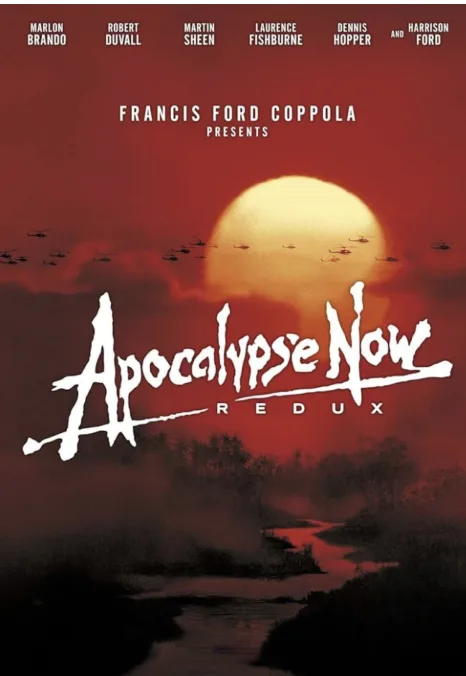
But that wasn’t always the case; many wildly successful movies have gone through long and elaborate and sometimes downright cursed productions. One of the best examples of said production from hell would be APOCALYPSE NOW (1979). So, let’s compare the two.
Directed by Francis Ford Coppola and featuring another packed cast, the movie is based on the Joseph Conrad’s novel ‘Heart of Darkness’ about bringing home a British officer who is located somewhere on the Congo River. John Milius wrote and adapted the script for APOCALYPSE NOW, changing the setting from colonial Africa to the Vietnam War. Some sources claim he had written well over ten versions of the script before filming, and that probably should’ve foreshadowed how the rest of the production would go. Before Coppola took on the mantle of director, Milius wanted George Lucas to direct the movie, even planning to shoot it on location in South Vietnam. Some location scouting happened before Lucas ended up passing on the offer due to the fact that he was preoccupied with developing AMERICAN GRAFFITI (1973) and eventually STAR WARS: A NEW HOPE (1977). That meant that the filming was delayed until further notice, and like many other projects, it almost never made it out of the screenwriting phase. In this case, however, the delay was short-lived, as Coppola decided to move up from producer to director. Now that they could finally think about starting filming, the issue was finding the military equipment they could have access to, since the US troops in South Vietnam had laughed at Milius’s original proposal. The only other logical idea was to enter another war zone, settling on filming in the Philippines, which, besides the jungle, also had American military equipment.
In the spring of 1976, they officially moved to the Philippines to begin filming. It only took three weeks for Harvey Keitel, originally cast as Captain Benjamin L. Willard, and Coppola to have a falling-out, which resulted in Keitel quitting the project and leaving the studio seven years before his contract was due to end. By the time their backup, Martin Sheen, flew over to replace Keitel, a typhoon had destroyed a lot of the set pieces, setting the production back a few million and a lot of time. When filming resumed again, Marlon Brando showed up, overweight, unprepared and unfamiliar with not just the source material but also the script for the movie he was acting in. This forced production to shoot scenes with him in the dark, in an attempt to hide his ‘large profile’ and, when possible, turn the camera away or position it in such a manner that he could read the lines he had refused to learn beforehand. Another major issue was the fact that the Philippines were experiencing ongoing civil unrest, meaning they could never get to shooting the action scenes because the choppers would get called back to perform actual military missions.
Drug abuse and alcoholism also plagued the set, and Dennis Hopper tried to explain to Coppola that he needed cocaine to shoot his scenes, spending most of his time on camera under the influence. Can’t argue with the man if it works. Hopper’s cocaine addiction also sparked a feud between him and Brando, to the point where the two refused to film scenes together, which led to their shared scenes needing to be edited together in post. Coppola and Brando were on shaky ground as well, until they eventually stopped working on scenes altogether. Coppola’s assistant started directing the scenes with Brando. Some of the temple scenes also contained real cadavers that the production team had gotten from a local morgue, only for the police to show up and inform them that the very real dead bodies they had acquired actually came from a grave robber, seizing their passports and taking back the bodies. Martin Sheen wasn’t holding up much better as filming went on, struggling with alcoholism to the point where the famous opening scene wasn’t even acting, just a genuine mental breakdown that they happened to film. They wrapped up filming in late 1976, only for Coppola to realize that the film was a mess and, just a few short weeks later, fly everyone back to continue filming. During the reshoot, Sheen almost died from a heart attack, and they had to lie about his well-being to the studio in order to keep on filming. And by the end of production, Coppola had lost over a hundred pounds, had an epileptic seizure and threatened to kill himself on three separate occasions, flying back to the States as a broken man. And that was all before post-production.
If APOCALYPSE NOW managed to not only finish filming but also to become one of the greatest films of the 20th century, I think it’s safe to say we will be getting a part two from Matt Reeves.
By Timur Jalovcic · posted 27 November 2026 · edited by Nadja Zevedji The views expressed in this article are the author’s own, and may not reflect the opinions of N/A Magazine.