La Bola Negra: A Tale of Love Stories Untold
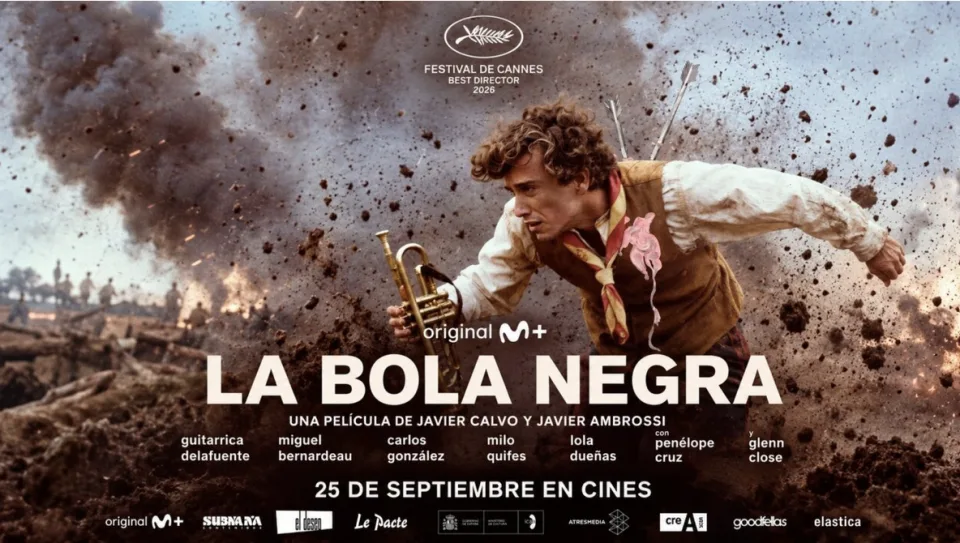
Have you ever been desperate to watch something? Have you seen a poster or a movie still, or watched a trailer or a cut scene and thought ‘I need this’? This is how I have been feeling since the blessed day I saw the flamenco scene from La Bola Negra. And after several failed attempts to witness the film's triumphant festival circuit, last week, in the comfort of a plush red chair in the biggest screen of a local cinema, my longing was finally fulfilled.
Much like the dance in the abovementioned scene (released as a fragmento ahead of the movie’s premiere at Cannes Film Festival), La Bola Negra is an intricate exercise in restraint and release. With an intoxicating rhythm of delicate intimacy and cinematic grandeur, directorial duo Javier Calvo and Javier Ambrossi (Los Javis) choreograph a production that captures the audience and envelops them long after the final credits roll. The ambitious scope of the story (a cross section of nearly a century of Spanish history) serves to contemplate the most intimate and sacred questions - love, choice, and identity. Yet, caught in the whirlpool of twentieth-century Spain, (two world wars, a bloody civil war, several dictatorships, religious and ideological turmoil) these personal matters are politicized and, as critic Justin Chang puts it, forced into 'the fascism of the closet'. Matters of the heart were the choice between life and death. Innumerous love stories, queer and straight, were suffocated beneath the dust and blood of war.
It is this climate that poet and playwright Frederico García Lorca lived, created in, and was murdered by. His final unfinished play, Lorca’s only work about an explicitly gay character, is both the film's namesake and at the heart of its story. But I won't say more than that. I must warn you that this review will be intentionally cryptic about the movie’s plot. That is mainly because part of the magic of La Bola Negra is unravelling its story as you watch it. It is also because I appreciate vagueness in both reviews and trailers and don’t understand why these days both constitute a spark notes-esque summary of the plot. Like, isn’t the point for me to decide if I want to watch the movie? Why are you spoiling it, Justin Chang? I digress. To avoid spoilers I will mostly focus on the fragmento, which has become the film’s calling card.
Like every good teaser, the fragmento contours the movie’s best attributes while suggesting what else it has to offer - a dance of vibrant visuals charged by cultural legacy and rich symbolism. The camera follows Milo Quifes’ (Carlos) passionate flamenco, focalising the scene as a moment of personal catharsis. María Terremoto’s powerful vocals accompany the dance and dictate its emotional arc. As such, Los Javis utilise the traditional Spanish artform as an expressive and potent mode of storytelling. Yet their experimentation is not limited to folk influences - the pair is just as comfortable incorporating WW2 burlesque and Martin Solveig’s 2010 dance anthem ‘Hello’. The camerawork is equally deft in sweeping wide shots and sensual close ups. Adding the fact that it is shot on lush 35mm film, La Bola Negra proves a piquant delight for viewers with an appetite for colour.
The acting is just as mouthwatering. While the cast is encrusted with veterans of the profession (Glenn Close, Lola Dueñas, and Almodóvar darling Penélope Cruz), they are peppered throughout the story, gracefully supporting Los Javis’ rising stars. Singer-songwriter Guitarricadelafuente’s acting debut in the lead role of Sebastián is nothing short of impressive. The tension between him and co-star Miguel Bernardeau (Rafael Rodríguez Rapún) slowly heats up the screen until ultimately burning a hole through it. Carlos González’s turn as playwright Alberto Conejero (who co-wrote La Bola Negra with Los Javis) is layered and sensitive to the complexities of his real life counterpart. My favourite performance was, unsurprisingly, Milo Quifes as Carlos - his perfectly stiff posture entraps desire, grief, self-doubt, fear and a deeply buried desire to rebel, a tapestry of emotions palpable in even the slightest trembles of his eyes and mouth. In the craft of acting the 25 year-old is undoubtedly a flamenco virtuoso. His multifaceted performance is made even more impressive considering that La Bola Negra marks his acting debut. Los Javis demonstrate complete trust that their young actors will carry La Bola Negra. It is refreshing to see a film of such scale being led by new talent.
Watching La Bola Negra is, in the most elegant and non-prescriptive sense, a didactic experience - yes, it educates on Spanish queer history and literature, but the film is ultimately a lesson in empathy. In self-empathy. It is also, I believe, one of those rare films that shapes its audience's expectations of what cinema can achieve. To close this off, I will afford myself to give you one piece of advice - if you want to try to analyse the fragmento, watch out for the billiard balls.
By Aneliya Stanislavova · posted 27 November 2026 · edited by Beth Hodgson The views expressed in this article are the author’s own, and may not reflect the opinions of N/A Magazine.